

PVC vs. PP vs. PVDF: Choosing the Right Piping Material for Chemical Process Utilities
When designing chemical process utility systems, choosing the right piping material is critical. The wrong material can lead to corrosion, leaks, downtime, and costly replacements. The most common materials used for chemical process utilities in Malaysia are PVC, PP, and PVDF.
This guide explains the key differences between these materials and helps you choose the best option for your facility.
Which material is best for chemical process utilities?
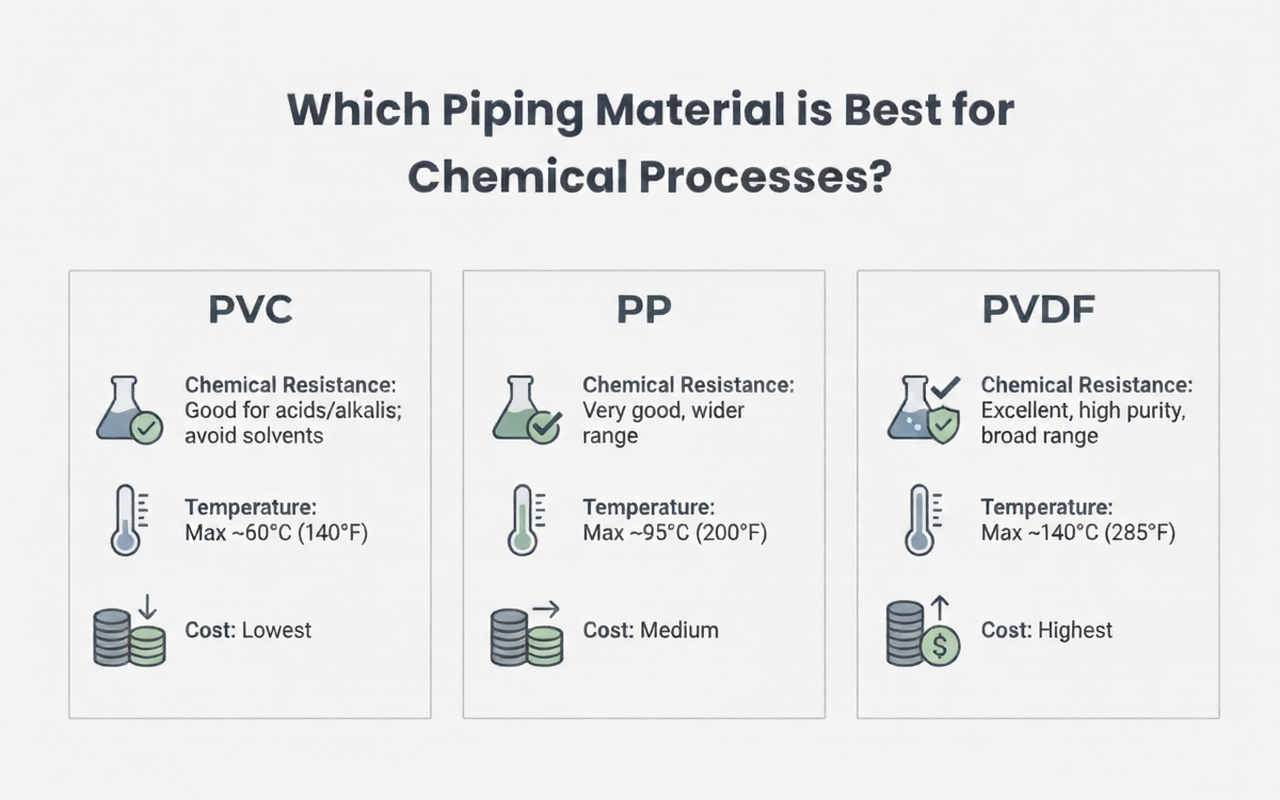
The best piping material depends on the chemical type, temperature, pressure, and installation environment.
In general:
- PVC is suitable for low to medium chemical exposure and lower temperature applications.
- PP is better for higher chemical resistance and slightly higher temperatures.
- PVDF offers the highest chemical resistance and temperature tolerance, but it is more expensive.
Why material selection matters for chemical utilities
Chemical process utilities often handle corrosive fluids such as acids, alkalis, solvents, and contaminated water. Using a material that is not compatible can cause:
- Corrosion and leaks
- Contamination of process fluids
- Reduced system lifespan
- Safety risks and downtime
Choosing the right piping material helps ensure long-term reliability, safety, and lower maintenance costs.
1. PVC (Polyvinyl Chloride) Piping
What PVC is used for
PVC is a widely used piping material for chemical utilities, especially in low to medium corrosive environments.
When PVC is suitable
PVC is ideal for:
- Chemical wastewater systems
- Neutral or low-strength acids and alkalis
- Low temperature processes
- Low-pressure piping systems
Advantages of PVC
- Cost-effective
- Easy to install
- Lightweight
- Resistant to many common chemicals
Limitations of PVC
- Not suitable for high temperature applications
- Limited resistance to strong solvents
- Can become brittle over time under UV exposure
2. PP (Polypropylene) Piping
What PP is used for
PP piping is commonly used for industrial chemical utilities where stronger chemical resistance is required.
When PP is suitable
PP is ideal for:
- Stronger acids and alkalis
- Higher temperature fluids than PVC
- Chemical dosing systems
- Process drainage systems
Advantages of PP
- Better chemical resistance than PVC
- Higher temperature tolerance
- Stronger impact resistance
- Suitable for more demanding industrial applications
Limitations of PP
- More expensive than PVC
- Not suitable for very high temperature applications
- Can be affected by prolonged exposure to UV light
3. PVDF (Polyvinylidene Fluoride) Piping
What PVDF is used for
PVDF is the highest grade among PVC, PP, and PVDF. It is commonly used in highly corrosive and high temperature chemical processes.
When PVDF is suitable
PVDF is ideal for:
- Strong acids and strong solvents
- High temperature chemical processes
- Critical applications requiring maximum chemical resistance
Advantages of PVDF
- Excellent chemical resistance
- High temperature tolerance
- Long service life
- Suitable for aggressive chemical environments
Limitations of PVDF
- Higher cost compared to PVC and PP
- Requires skilled installation
- Higher material cost may not be justified for non-critical applications
How to choose the right material for your chemical process utility system
When selecting piping material, consider these factors:
1. Chemical compatibility
Identify the chemical type and concentration. Some materials may resist certain chemicals but not others.
2. Temperature and pressure
Check the maximum temperature and pressure of your process. PVC is limited to lower temperatures, while PVDF can handle higher temperatures.
3. Installation environment
Consider exposure to sunlight (UV), mechanical stress, and site conditions.
4. System lifespan and maintenance
Choose a material that minimizes maintenance and maximizes lifespan to reduce long-term costs.
5. Budget
Balance cost and performance. PVC is cost-effective, but PVDF may be necessary for high-risk environments.
How EEPS can help
EEPS Engineering provides piping system design and installation for process utilities, including PVC, PP, and PVDF piping. Our engineering team can assess your process requirements and recommend the best material based on chemical compatibility, temperature, and budget.
Conclusion
Choosing the right piping material for chemical process utilities is a key decision that affects safety, reliability, and long-term costs.
For most applications:
- PVC is suitable for low to medium corrosive chemicals and low temperature systems.
- PP is ideal for stronger chemicals and higher temperature requirements.
- PVDF is best for highly corrosive and high temperature applications where maximum resistance is required.
Selecting the right material helps ensure your utility system operates reliably and safely.
For complete process utility system installation and piping solutions, contact EEPS Engineering.
Frequently Asked Questions (FAQs)
Which piping material is most cost-effective for chemical utilities?
PVC is the most cost-effective, but it may not be suitable for highly corrosive or high-temperature applications.
Can PVC be used for acid chemical systems?
PVC can be used for low to moderate acids, but strong acids require more resistant materials like PP or PVDF.
How does temperature affect material choice?
PVC is limited to low temperatures. PP can handle moderate temperatures, while PVDF is suitable for higher temperatures.
Is PVDF necessary for all chemical systems?
Not always. PVDF is best for aggressive chemicals and high temperature processes. For less corrosive systems, PVC or PP may be sufficient.
Disclaimer:
The information provided in this article is for general information purposes only. For accurate assessment and implementation, please consult qualified engineering professionals or contact EEPS Engineering for project-specific advice. While we strive for accuracy and completeness in our content, we cannot guarantee that it is error-free. EEPS Engineering Sdn. Bhd. assumes no responsibility for any errors or omissions.