

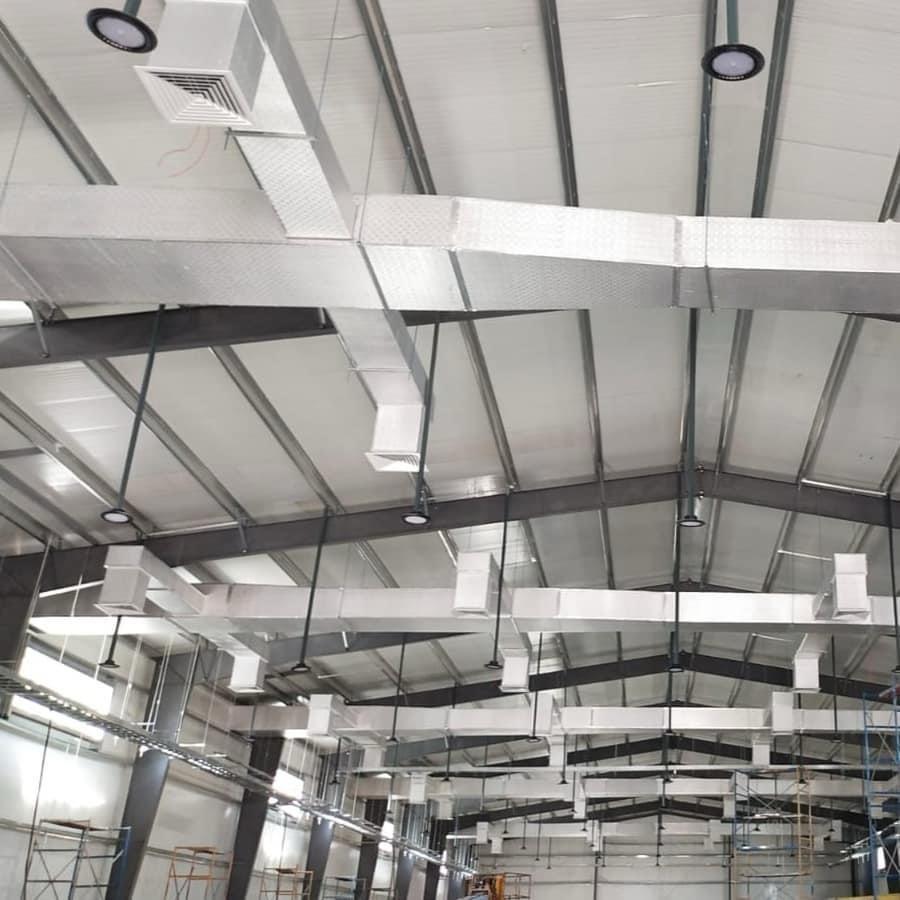
Common HVAC Design Mistakes in Industrial Projects
In industrial facilities, the HVAC system (Heating, Ventilation, and Air Conditioning) plays a crucial role in maintaining air quality, temperature control, and overall comfort. However, many industrial projects face significant challenges due to common design mistakes. These errors can lead to inefficiencies, increased costs, and even system failure.
To ensure your HVAC system is optimized for performance, it’s important to avoid these typical design mistakes in industrial settings.
1. Inadequate Load Calculations
One of the most common mistakes is failing to properly calculate the heating and cooling load required for the space. Incorrect load calculations can result in undersized or oversized equipment, leading to inefficiency, higher energy costs, and increased wear on the system.
How to Avoid It:
Work with an experienced HVAC contractor in Malaysia to perform detailed load calculations considering factors like insulation, equipment, number of people, and airflow patterns.
2. Poor Ductwork Design
Improperly designed ductwork can cause significant air distribution issues. This includes problems like poor airflow, noisy systems, or uneven temperature distribution throughout the facility.
How to Avoid It:
Ensure proper duct sizing and layout to minimize resistance and maximize airflow. Conduct pressure tests and airflow simulations to confirm optimal duct design.
3. Lack of Maintenance Access
Some HVAC systems are designed without adequate access points for maintenance and repairs. In industrial environments, where systems can be large and complex, this can make it difficult to conduct routine maintenance and troubleshooting.
How to Avoid It:
Include enough clearance space around HVAC equipment for easy access. Ensure regular inspections and maintenance are planned from the start.
4. Ignoring Energy Efficiency
Focusing too much on initial cost can lead to overlooking energy efficiency in the design phase. Industrial HVAC systems can be energy-intensive, and poor efficiency translates to higher long-term costs.
How to Avoid It:
Incorporate energy-efficient components such as variable speed drives, energy recovery ventilators (ERVs), and high-efficiency filters. Choose HVAC contractors in Malaysia who are familiar with energy-saving designs and technologies.
5. Improper Ventilation System Design
Ventilation is essential to maintaining indoor air quality (IAQ) in industrial spaces. A poorly designed ventilation system can result in inadequate airflow, poor air quality, or the spread of contaminants.
How to Avoid It:
Design a system that allows for proper air exchange based on the size and purpose of the facility. Ensure ventilation fans are appropriately sized and located to maximize airflow.
6. Failure to Plan for Future Expansion
Many industrial projects fail to consider future growth. HVAC systems that are too small or too rigidly designed may not be able to accommodate future expansion or changes in usage.
How to Avoid It:
Design the HVAC system with flexibility in mind, considering future load increases or potential facility expansions. Opt for scalable systems that can adapt to growth without requiring a complete overhaul.
7. Not Considering Local Regulations and Standards
In Malaysia, local building codes and environmental regulations play a significant role in HVAC design. Failure to comply with these standards can result in costly fines and the need to redesign the system.
How to Avoid It:
Always consult local regulations and standards before starting the design. Work with a qualified HVAC contractor in Malaysia who is familiar with local codes, such as those from the Department of Environment (DOE) or the Malaysian Standards Organization (MS ISO).
Conclusion
Avoiding common HVAC design mistakes in industrial projects can save time, money, and headaches in the long run. Proper load calculations, ductwork design, energy efficiency, and adherence to regulations are essential for creating a system that performs at its best. If you are in Malaysia and looking for expert HVAC design and installation, partnering with an experienced HVAC contractor will ensure your project is successful from start to finish.
Frequently Asked Questions (FAQs)
What are the common mistakes in HVAC design for industrial projects?
Common mistakes include incorrect load calculations, poor ductwork design, ignoring energy efficiency, and lack of maintenance access.
How can I improve energy efficiency in my HVAC system?
Use energy-efficient components, regular maintenance, and upgrade to modern technologies like variable speed drives or energy recovery ventilators.
Why is proper ductwork design important for industrial HVAC systems?
Proper ductwork ensures efficient airflow, reduces noise, and helps maintain consistent temperature, improving overall HVAC system performance.
Disclaimer:
The information provided in this article is for general information purposes only. For accurate assessment and implementation, please consult qualified engineering professionals or contact EEPS Engineering for project-specific advice. While we strive for accuracy and completeness in our content, we cannot guarantee that it is error-free. EEPS Engineering Sdn. Bhd. assumes no responsibility for any errors or omissions.